The most famed Temple ever erected dates back to the days of King Solomon. This wise ruler determined to erect a structure
that would fittingly express his adoration of God whom he devoutly worshiped and served. To assist him in his glorious
undertaking he selected two skilled counselors, Hiram, king of Tyre, and Hiram Abiff, a widow's son, whose devotion stands
without parallel in history. With these skilled helpers, Solomon erected a magnificent temple of God that stands at the
beginning of all Masonic activity.
The development of the Detroit Masonic Temple is indicative of the growth and the strength of the Masonic Fraternity in this
community.
The first move towards a suitable home for the Order in Detroit was made in 1891. In January of that year, the bodies
occupying space over the old Wayne County and Home Savings Bank on West Congress Street appointed a committee to confer
regarding the purchase of property and the erection of a temple which would accommodate the Lodges, Chapters,
Council, Commanderies and the Michigan Sovereign Consistory. Several meetings were held by this joint committee in1891 and
the early part of 1892. On March 16, 1892 representatives of Zion, Detroit, Union, Ashlar, Oriental, Schiller and Kilwinning
Lodges, Monroe and Peninsular Chapters, Monroe Council, Detroit and Damascus Commanderies, and the Michigan Sovereign
Consistory, held the first meeting of record at which time Michigan Sovereign Consistory was requested to place a valuation
on the property which it owned on Lafayette Boulevard. At a meeting held March 23rd of the same year, Michigan Sovereign
Consistory placed a valuation of $37,500 on the 75 feet between Cass Avenue and First Street on Lafayette Boulevard, and
generously offered to transfer this property to a new corporation to hold title to this property, where a suitable structure
should be erected to house all Masonic Bodies, and agreed to accept therefor certificates of contribution. Thus we have the
beginning of the Masonic Temple Association of Detroit. The above land was added to by the purchase of adjoining property,
giving a total frontage of 150 feet on Lafayette Boulevard and a depth of 130 feet on First Street.
Committees were appointed to raise funds for the erection of this Temple. Complete plans and specifications, prepared by
Mason and Rice, were formally adopted on December 3, 1892. A committee was appointed to wait upon the State Legislature to
secure an enabling act to incorporate fraternal organizations, and on March 19, 1894 the Masonic Temple Association of
Detroit was formally incorporated. In designing the Temple to be erected on Lafayette Boulevard and First Street,
representatives then in charge of the activities, planned a structure, that in their opinion, would care for the needs of the
Fraternity for fifty years to come. The various bodies moved into the Temple in 1896.
Notwithstanding the careful planning and wise devising of the committee, the Order outgrew the Lafayette Boulevard Temple in
twelve years and in 1908 it was crowded to capacity. The growth of the Order had been so rapid that it was found necessary
to place restrictions on the use of the dining room service, the assembly halls and other parts of the Temple. With the idea
in mind of enlarging the Temple then in use, the Temple Association finally purchased 50 additional feet of land on Lafayette
Boulevard from the Newland Estate and 16 feet from the Benevolent Order of Elks.
Some time was spent by George D. Mason & Co., architects, in devising plans for the enlarging of the Lafayette Boulevard Temple
to take care of the over-crowded situation It was finally decided, however, that the land available in that location would not
permit the erection of a Temple that would be adequate for the needs of the Fraternity. A move was started in 1913 to
purchase a new location and a thorough survey involving many choice sites in the city of Detroit was instituted. After long
and careful study by the committee in charge, considering every angle which might enter into the erection of such a
structure as would be necessary, the Association finally obtained options on 350 feet of property fronting on Temple Avenue
(then Bagg Street), running in an easterly direction from the Northeast corner of Second Boulevard. Because of the desirable
location affording close proximity to the downtown section of the city, adequate transportation facilities, and a splendid
outlook on Cass Park which would forever give them an unobstructed approach to the Temple, the Association entered into
negotiations which resulted in the purchase of this property and commissioned George D. Mason & Company
to draw plans for the new Temple. After the plans bad been completed, Moslem
Temple purchased 50 feet of additional land fronting on Temple Avenue at the
eastern end of the property already secured and presented the same to the Masonic
Temple Association. This additional property enabled the Association to include
club quarters for Moslem Temple and the final designs of the structure were formally
approved.
During March, 1920 most elaborate plans were perfected covering the entire membership of the Fraternity in this community and
a campaign to secure subscriptions to finance the undertaking was inaugurated; the committee, through its initial efforts,
secured subscriptions amounting to $2,500,000,00.
In order to save the Association as much money as possible and secure the greatest values for the money spent, time and care
were used in placing the contracts for the various portions of the structure.
It was on Thanksgiving day in 1920 that the sod was first turned. And with many more months of planning and labor ahead, the
Craft was at work on this undertaking of worldwide interest. A great host stood in Cass Park for this occasion and flowed in
human currents up and down Second Boulevard and what was then Bagg Street. It is certain that no man will forget the
occasion.
George Washington's own working tools, brought from his Virginia Lodge, were employed. The first mortar was spread with the
same trowel that our first president used in the corner stone laying of the National Capitol. On September 18, 1922, thousands
of Master Masons and their families witnessed the corner stone of the Masonic Temple of Detroit being placed into position.
On Thanksgiving day of 1926 the final ceremony of this program took place when thousands gathered for the formal dedication
of the Temple and the consecration of its rooms, by the Grand Lodge of Michigan, to the work of the Craft. And as a means of
opening the public portion of the building as a civic center and for the use of the community at large, a most elaborate and
delightful program was offered in the Temple's beautiful auditorium.
The Detroit Temple is unique among the Masonic buildings of the country because all of the various bodies are housed in the
same structure. There are some twelve million cubic feet of space in all, making it the largest and most complete building
of its kind in the world.
The precedents for fraternal buildings are all in Greek or Egyptian. Nothing of the sort had been done in Gothic, yet the
architect felt that this style best expressed the traditions of Masonry, Solomon's Temple and the beautiful Scottish Rite
Cathedral in Washington to the contrary notwithstanding. Certainly the spirit and tradition of the Knights Templar and the
historic setting of the Scottish Rite are Gothic, and operative Masonry, having its origin in the guilds of Europe, has the
tradition of the great cathedrals of which they were builders.
In all, there are twenty-eight units in the building grouped into three major divisions: the ritualistic tower, the
auditorium and the Shrine Club. Provisions for fifty Masonic bodies which must operate independently were included in the
plans.
|
|
Highest Pinnacle of the Temple
|
The Ritualistic Building, or fourteen story tower, provides a home for twenty-six Blue Lodges, the Consistory, two
Commanderies, five Chapters and the Council. This tower is 210 feet high, dominating the view of the surrounding
neighborhood and facing beautiful Cass Park, five acres of green lawns and graceful elms. The Temple in its classical Gothic
architecture and facing of Indiana limestone gives one the impression of the massive medieval castles of old.
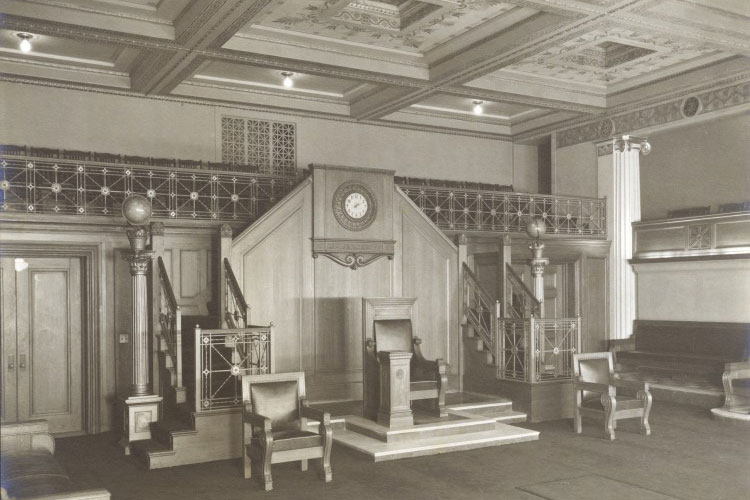
While it is as yet unfinished, the plans call for a third degree auditorium seating eight hundred on the top floor of the
tower. Below this on the various floors above the ground level are the ten other Blue Lodge rooms, all having different
decorative treatment, the motifs of decoration being taken from the Egyptian, Doric, Ionic, Corinthian, Italian Renaissance,
Byzantine, Gothic and Romanesque. These rooms are all true to period and the composite has not been used. All of the art
work throughout the building, especially the beautifully decorated ceilings, was done under the personal direction of famous
Italian artists.
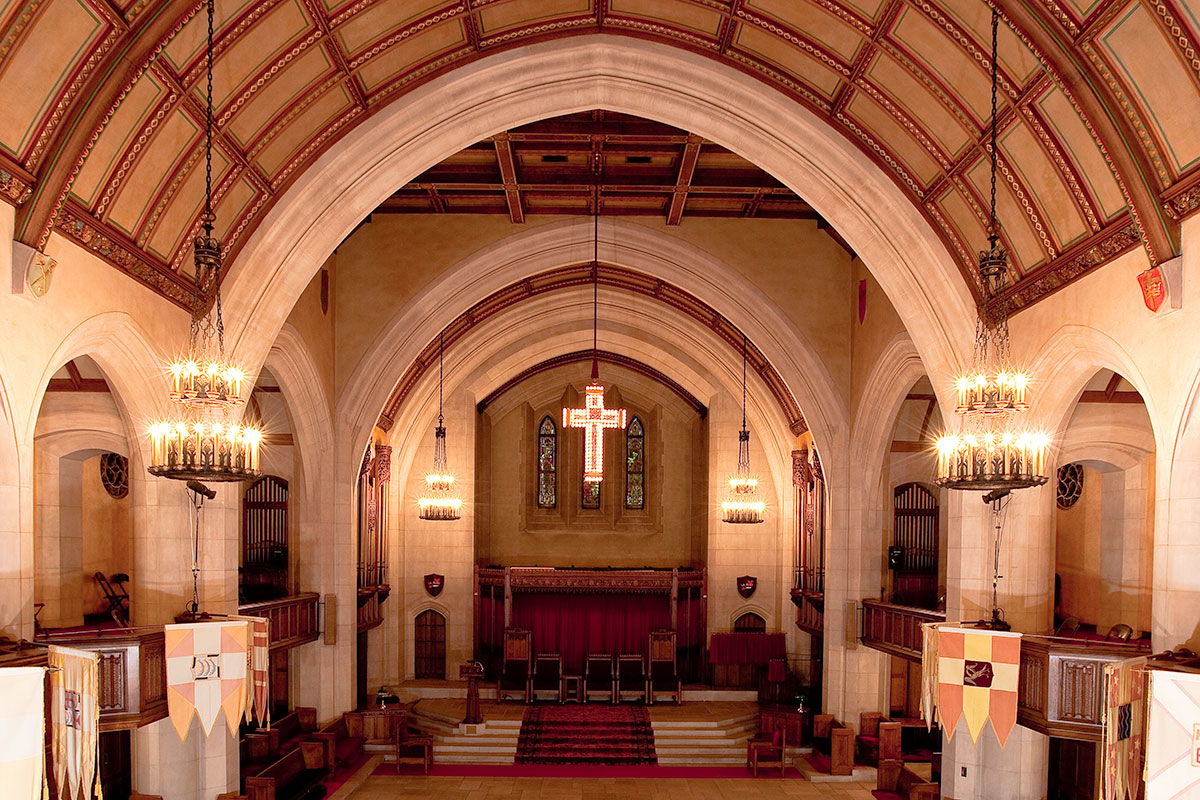
On the third floor of the tower we find the quarters of the Commandery, consisting of the beautiful parlor treated in the
Tudor period with its walls of high oak paneling and the two figures in armor creating an atmosphere suggesting the period
of knighthood. The work room of the Commandery (known in the parlance of Templarism as the Asylum) adjoins the parlor. This
room is truly a poem in stone and wood with a touch of the cathedral suggested by its Gothic architecture and stained glass
windows, placed as a memorial to those who gave much of their life to the progress of this phase of the Order. The Asylum is
a reproduction of the room in the Tower of London where the knights received their charge before leaving on the Crusades
during the middle ages. These details have also been carried out in the stone flagging of the floor with its worn edges
suggestive of the rough wear caused by the mail shod feet of the ancient knights.
Adjoining the Asylum is the small but beautiful Red Cross Room devoted to a part of the ritualistic work of the Templars.
On the second floor we find the Chapter Room, made most impressive by its heavy red hangings which cause to stand out in bold
relief the white Doric pillars surrounding the room.
The main lobby is a work of art, the decorative scheme having been adopted from a room in an old castle in Palermo, Sicily.
The expansive archway of the main entrance with the especially designed chandelier and handsomely wrought brass floor plaque
are all features of interest. The bronze doors of the six elevators which serve the tower are emblazoned with the symbols
of the Craft, the same symbolism being very artistically incorporated in the decorative scheme throughout the entire building.
|
|
| |
Main Lobby
|
|
|
This brass floor plaque, five feet in diameter, is emblematic of
TRUTH, STRENGTH and CHARITY. |
|
Floor Plaque, Main Lobby
|
Adjoining the main lobby is the Scottish Rite lounge, richly furnished with period furniture, beautiful hangings and Persian
rugs, with its high paneled walls, heavy molded ceilings and cathedral windows creates an atmosphere suggestive of Scottish
Rite Masonry. In this lounge is hung an original painting of George Washington as master of his lodge, done by Emanuel
Leutze in the year 1855, and also the wonderfully wrought suit of armor fashioned in Europe especially for the Scottish Rite
quarters.
Stepping from the lounge through an ample hall, one enters the Scottish Rite Cathedral with its seating capacity of 1600 and
its fully equipped stage for the dramatization of the Scottish Rite degrees. The Cathedral is a beauty spot of the Temple
made rich by the carvings and color work of the whole which is most effectively carried out in the ceiling. The Cathedral is
equipped with a four manual organ of 70 stops, the echo of which is located in the ceiling. The stage is modern in
every detail with a width of 64 feet from wall to wall and a depth of 37 feet from foot lights. The proscenium opening is 35
feet. The height from floor to fly gallery is 28 feet and from floor to gridiron is 64 feet. There is a counterweight
system of 100 sets of lines and a remote control five color preset switchboard.
|
|
Scottish Rite Cathedral
|
Passing along from the Scottish Rite Cathedral on the main level to the center portion of the Temple we come to the
auditorium or public portion of the structure. In this section of the building on the third floor mezzanine is the mammoth
Drill Hall, comprising 17,500 square feet of open floor space. This Drill Hall is used by the uniformed bodies of the
organization Commanderies, Consistory and Shrine Patrol. The Drill Hall is equipped with one of three floating floors in the
United States; that is, the entire floor is laid on felt cushions. This type of construction provides more or less give to
the floor which tends to relieve the marchers.
|
|
Drill Hall
|
Immediately under the Drill Hall we enter the Main Theatre. The Main Theatre of the Masonic Temple is one of the finest
public halls in the United States, having a seating capacity of about 5000. Because of the arrangement there is maintained a
very intimate contact between audience and stage. Aside from the Shrine Ceremonials and an occasional concert conducted by
some of the bodies, this auditorium is available to the public and is becoming more and more a center for the finest things
in dramatics and music offered to the people of Detroit. The decorative treatment of the auditorium has considerable detail
adapted from the Venetian Gothic and in the handling of the color decoration its character his been consistently carried out.
The general tone is gold which has been enlivened with red and blue to produce a quiet richness of color seldom attempted
in this type of work. A great deal of careful study was given to the acoustical treatment of this room which has produced an
auditorium where the hearing qualities are perfect from every seat. The auditorium is lighted by indirect light from the
balcony rail and from two magnificent electroliers suspended from the ceiling. These chandeliers weigh one and a half tons
each and take three quarters of an hour to lower to the ground level. They are thirteen feet over all, and eight feet in
diameter. Having a jeweled effect with red, blue and amber on dimmers a great variety of lighting combinations are possible.
|
|
Main Theatre
|
It might be mentioned here that the lighting fixture contract for the Temple called for the greatest number of special
fixtures of any building in the country. There is a great variety of styles all well studied and in perfect scale.
The stage of the auditorium is the second largest in the United States, having a width between walls of 100 feet and a depth
from curtain line of 55 feet. It is equipped with a counterweight system of 90 sets of lines and a remote control four
color pre-set switchboard. Supported from the gridiron are two structural steel bridges for carrying border and other lamps.
The proscenium arch is 64 feet wide and 32 feet high. There are 23 well furnished dressing rooms, both the individual type
and those for ballet and chorus groups, these being on three levels are served by elevator.
Both the Main Theatre and the Scottish Rite Cathedral are provided with picture booths, equipped with the most modern
Motiograph machines, effect machines and spot lights.
The plans for the auditorium provide for an organ, the lofts of which are located on either side of the proscenium arch, but
as yet the instrument had not been installed.
In this center section of the building directly below the auditorium and approached by a wide stairway on either side is the
Fountain Ball Room, a very expansive circular room receiving its name from the tiled fountain which produces a very
beautiful effect when lighted. The Fountain Ball Room provides enough space for the seating of 1,800 at a banquet, or will
provide for 1,500 couples when the room is used for dancing purposes.
|
|
Fountain Ballroom
|
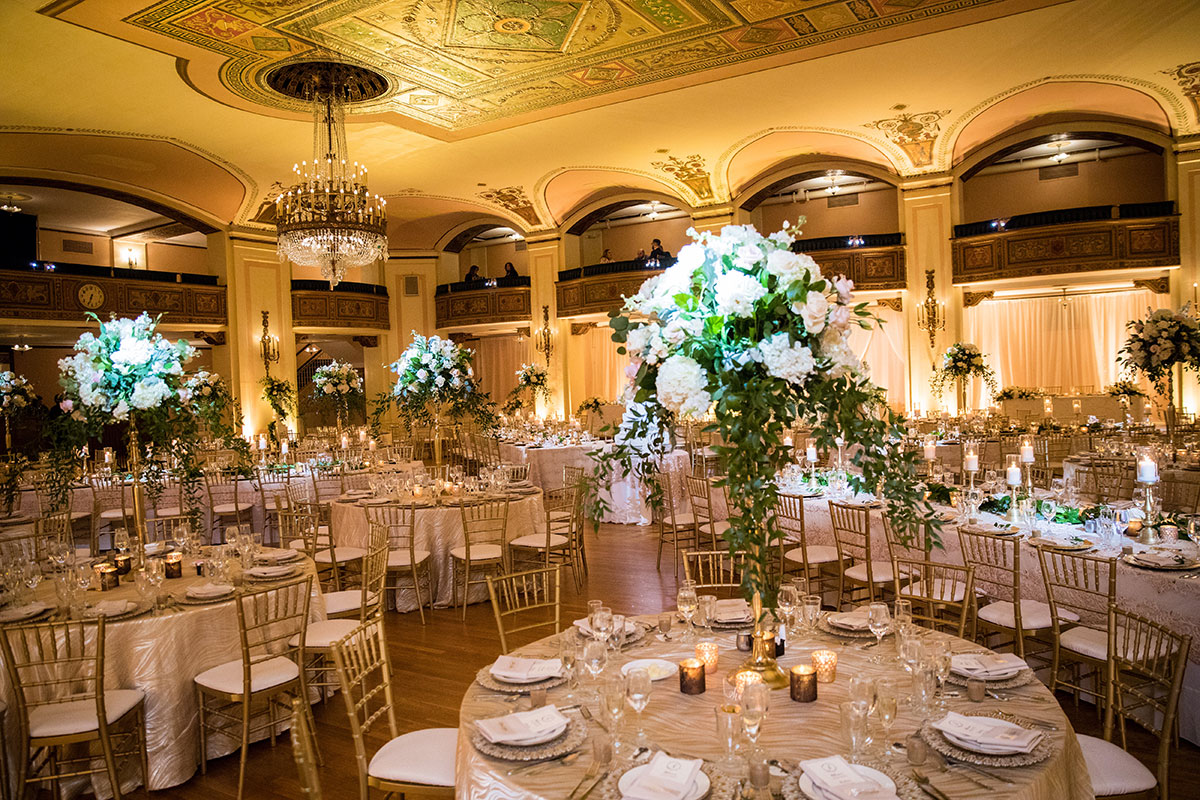
Located a half floor below is the slightly smaller Crystal Ball Room which is unquestionably one of the most beautiful rooms
in America. The decorations of this room are in the Italian style and the two magnificent crystal electroliers, from which
the room is given its name, lend the final touch of magnificence. Nine hundred diners may be accommodated in this ballroom
and there is ample room for 750 couples for dancing.
|
|
Crystal Ballroom
|
Adjacent to these ball rooms are the five dinner rooms, recreation room and public grill. By using all of the space
available for the serving of banquets the catering department of the Masonic Temple can serve 5000 persons at one sitting.
For the convenience of those using the Temple there is located on the ball room mezzanine floor a five-chair barber shop and
a soda fountain where light lunches are served.
Months of planning were used in working out the details of the mammoth kitchens of the Temple which are manned by a steward
and chef with years of experience. The staff of the catering department is the best to be had, the chef having been trained
in the leading hotels of Europe and America. All of the equipment in the kitchens are electrically operated, including the
ovens, kettles, dish washers, dough mixers, etc. The cooking is all done in aluminum and great care is used to maintain
absolute cleanliness in the careful preparation of the food. This department operates its own pastry shop where the pastries
used at the formal banquets as well as the daily dining service are produced. The Temple is equipped with two 40-ton ice
machines which provide for the refrigeration and the making of ice.
|
|
Fountain Ballroom
|
The ten story unit at the east end of the building is devoted to the exclusive use of Moslem Temple. The main floor with its
clerk's desk and offices for the Club manager and recorder of the Shrine has the appearance of the most up-to-date hotel
lobby.
On the second floor we find the magnificently furnished lounge with a well appointed writing room and library adjoining.
No pains have been spared in providing the finest period furnishings, rare rugs and hangings for the Shrine Club.
Above the lounge we have the fully equipped billiard room with the card room adjoining, and above that the club gymnasium
equipped with the most modern apparatus. The remaining floors are devoted to the guest rooms, there being
eighty in all. These rooms with their connecting baths are as delightful as any hotel rooms in the city and are available
for any Noble of the Mystic Shrine or member of the Blue Lodge who may care to take advantage of the same at very reasonable
rates.
The power plant of the Temple which is equipped with the most scientific mechanical devices of the latest design is
sufficient to produce the power, light and heat for a community of 50,000. High pressure steam, air and water lines and
electric cables are carried through immense tunnels placed 34 feet below the street, these tunnels being 10 feet in width.
The main tunnel, which runs east and west, is intersected by two tunnels of equal dimensions running north and south. In
this manner the steam, air and water lines and the electric cables are accessible for inspection and repairs at any time.
Great care was exercised in installing the necessary fire and water protection. The Detroit Water Commission
installed an eight inch main from their service line on Temple Avenue and a six inch main from their service line on Second
Boulevard. Thus interruption on either one of the mains will not impair the operation of the building. The electrical
equipment through out the building is known as remote control apparatus, the same system being used also on the main
switchboard. Automatic contactors are used everywhere with over and under load attachments, fuses therefore being used only
at the distributing panels and momentary overload on any part of the electrical equipment is taken care of automatically at
the main switchboard. In connection with the engine room is the machine shop where the repair work about the Temple is
taken care of.
The Masonic Temple is one of the most complicated buildings ever erected in the United States. In the ritualistic tower
but four columns extend in a vertical line from the basement to the roof, the other great columns being staggered involving
eccentric loads which must be carried by proper steel fabric. Many mammoth trusses are used throughout the structure; two
Pratt trusses 39 feet in depth and 78 feet in length support three floors at the top of the ritualistic tower. Above the
Consistory Cathedral carrying the Commandery and other apartments between the third and sixth floors two immense plate
girders are used weighing twenty tons each. These girders are 18 feet in depth and 78 feet in length. The Drill Hall and
the Main Theatre are supported by eight immense Pratt trusses 18 feet in depth and 76 feet in length, the upper cord of these
trusses supporting the Drill Hall and from the lower cord is suspended the ceiling of the Main Theatre.
A further idea of the size and extent of this great Temple erected by the Masonic Fraternity may be gleaned from the
following facts: there are 1,037 rooms in the Temple, the roof of copper concrete and asphalt is 80,000 square feet in
area-or nearly two acres; the excavation for the foundations required the removal of 1,620,000 cubic feet of earth:
3,850,000 bricks were used for partitions and walls; the exterior contains 100,000 cubic feet of stone from the quarries of
Indiana, and the structural steel used in the erection of the building weighs 16,000,000 pounds.
This gift of the Fraternity is not only to the local community, for the Detroit Masonic Temple is assuming a national as well
as an international position because of its facilities and service.
|